How to Create Montessori at Home?
- Amazing Star
- Feb 11
- 3 min read

Updated: Feb 13
Many parents want to incorporate Montessori principles into their homes but feel unsure about where to start. Concerns about space, cost, or not doing it “perfectly” are common. You want your child to grow independent, confident, and curious, without turning your home into a classroom.
The good news is that Montessori at home is practical, flexible, and can start with small, simple changes. You do not need fancy materials or a separate room. With intentional design, daily routines, and guided independence, your home can become a supportive environment where children thrive.
This guide provides a step-by-step guide on setting up Montessori at home.
Understand Montessori Philosophy at Home
Montessori at home is about respecting the child, fostering independence, and encouraging hands-on learning. Core principles include:
Child-sized furniture and accessible tools
Freedom within clear limits
Order and simplicity in the environment
Real-life activities instead of passive toys
The goal is to make everyday life a learning space while nurturing skills for both academics and daily life.
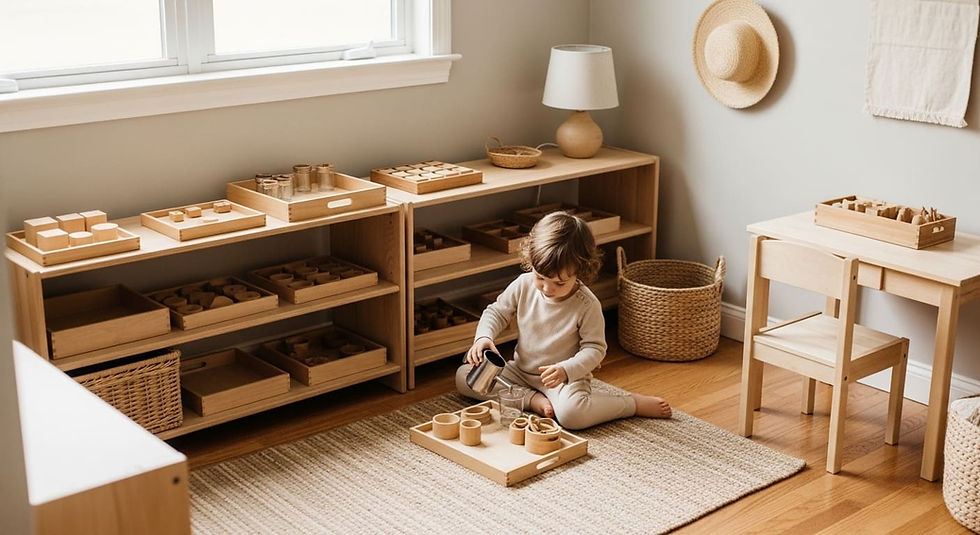
Observe Your Child First
Before buying materials or reorganising, spend time observing your child.
Look for:
Activities they naturally repeat
Tasks they try to do independently
Moments of high focus and engagement
Areas where they feel frustrated
Observation guides setup and ensures the environment meets your child’s needs.
Prepare the Environment
A prepared environment is the foundation of Montessori at home.
Preparation tips:
Keep shelves low and open so children can reach materials
Display a limited number of activities to avoid overstimulation
Use baskets or trays for organisation
Keep spaces clean, organised, and clutter-free
Order encourages concentration and emotional balance.
Design Child-Focused Areas
Montessori does not require a separate classroom. Existing spaces can be adapted.

Living Room Ideas
Low shelves for books and activities
Floor mat for focused work
Accessible art supplies
Bedroom Ideas
Floor or low bed
Open wardrobe with limited clothing options
Mirror at child's height
Small adjustments give children autonomy over their space.
Practical Life Activities
Practical life exercises form the heart of Montessori learning at home.
Examples include:
Pouring water or grains into containers
Washing fruits and vegetables
Sweeping or tidying
Dressing and buttoning practice
These develop coordination, responsibility, and self-confidence.

Montessori Materials
Materials should be purposeful and hands-on.
Encourage exploration and self-correction
Use natural materials when possible
Introduce new materials gradually
Rotate activities to maintain engagement
Everyday montessori toys often work better than expensive toys.
Encourage Independence
Montessori at home works best when children participate in daily routines.
Step stools in the kitchen and bathroom
Accessible snacks and water
Time for self-dressing and hygiene
Involvement in meal prep or cleaning
Independence builds executive function, confidence, and decision-making.
Set Clear Boundaries
Freedom works within structure. Children feel safe when routines and expectations are predictable.
State rules calmly and consistently
Maintain daily rhythms
Apply natural consequences
Use respectful communication
Consistency supports focus and emotional security.
Parent’s Role
Parents act as guides, not instructors.
Model calm, patient behaviour
Demonstrate tasks slowly
Give time for repetition
Avoid unnecessary correction
This approach strengthens motivation and self-reliance.
Keep It Simple and Sustainable
Montessori at home grows with the child.
Start small and expand gradually
Use household items before buying materials
Adjust the setup as the child develops new skills
Focus on purpose over aesthetics
Flexibility ensures long-term success.
Long-Term Benefits
A Montessori home fosters more than academic skills. Children gain:
Self-regulation and concentration
Independent problem solving
Responsibility for themselves and their environment
Positive attitude toward learning
These skills support lifelong growth and confidence.

Conclusion
Creating Montessori at home is about designing a simple, organised environment that encourages independence and purposeful activity. By making small adjustments to daily routines and spaces, you turn everyday moments into meaningful learning opportunities that build confidence and focus.
Over time, this approach strengthens responsibility, self-regulation, and problem-solving skills. A consistent, well-prepared home environment supports long-term development and nurtures a natural
love for learning.
FAQs
What age is Montessori at home suitable for?
It can start from birth and evolve with your child’s development.
Do I need special materials?
No, everyday items work as long as they are purposeful and safe.
How much space is needed?
Very little—small adjustments in shared areas are enough.
How do I handle discipline?
Focus on guidance, clear boundaries, and natural consequences.
Can Montessori at home work with school?
Yes, it complements both Montessori and traditional education.


Comments